What Does Professional Academic Editing Include?
What Does Professional Academic Editing Include?
Professional academic editing isn't just a grammar check.
It's one of the last opportunities to improve how your research is understood before submission.
Many researchers assume editing is simply about correcting language.
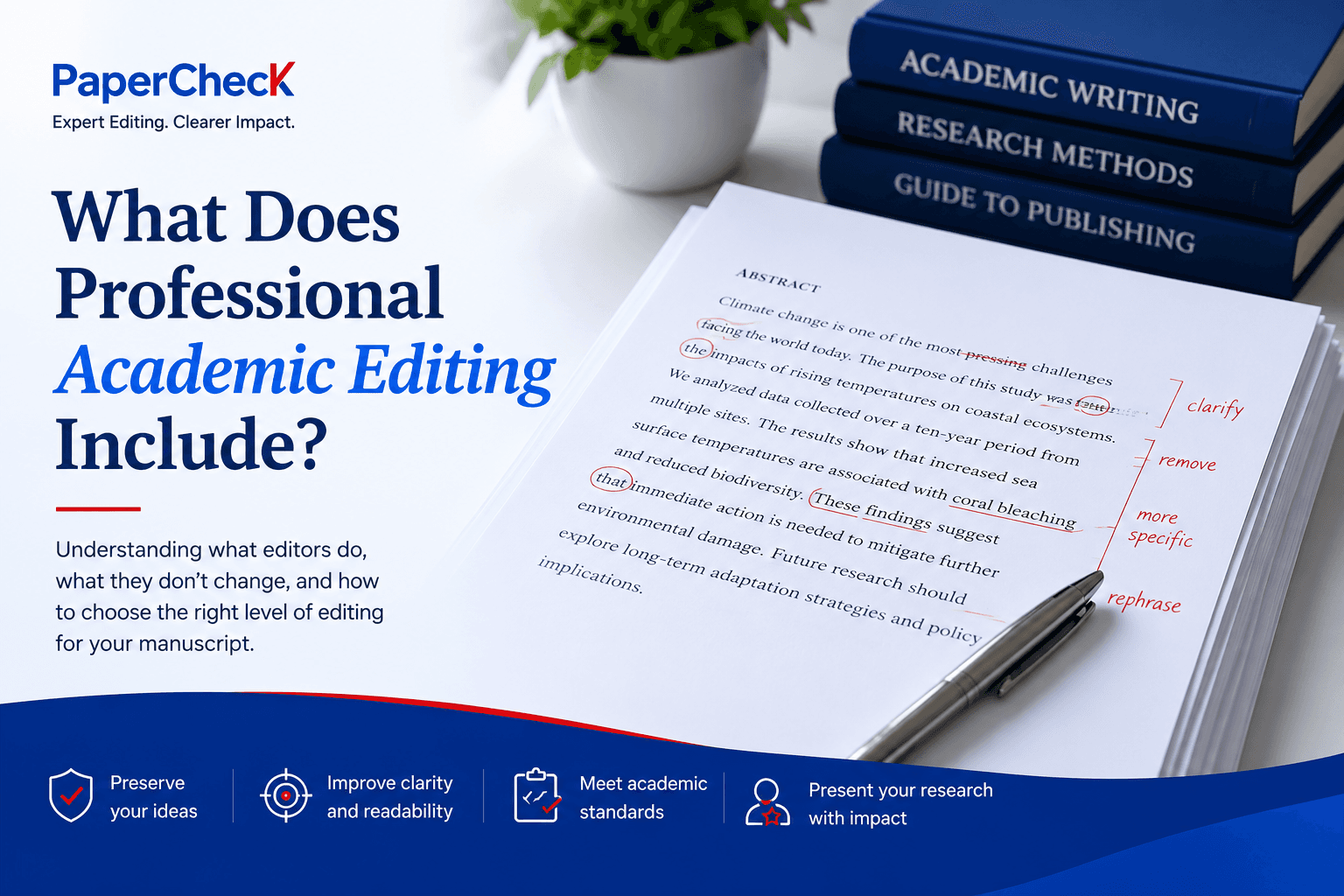
In reality, professional academic editing involves much more than grammar. It improves clarity, consistency, and readability while preserving the author's ideas, voice, and scientific contribution.
Understanding what is—and is not—included in the editing process helps authors choose the right service and know what to expect before submitting their work.
What Professional Editors Actually Do
Professional academic editing focuses on improving how a manuscript communicates, not on changing what it says. Editors review grammar, punctuation, sentence structure, word choice, and academic tone, but they also pay attention to how ideas flow from one paragraph to the next. If a sentence is technically correct but difficult to understand, it may be rewritten for clarity while preserving the author's intended meaning.
Consistency is another important part of the process. Editors look for repeated wording, inconsistent terminology, formatting issues, and small details that can distract readers from the research itself. Depending on the service requested, they may also review citations, references, or style guide requirements to ensure the manuscript follows the appropriate academic conventions.
What Editors Improve vs. What They Don’t Change
 This distinction is important because professional editing is not the same as rewriting or co-authoring a paper. Editors help authors present their work more clearly, but the research, analysis, and conclusions always remain the author’s responsibility.
Choosing the Right Level of Editing
Not every manuscript needs the same type of revision. The appropriate editing level usually depends on how close the paper is to submission.
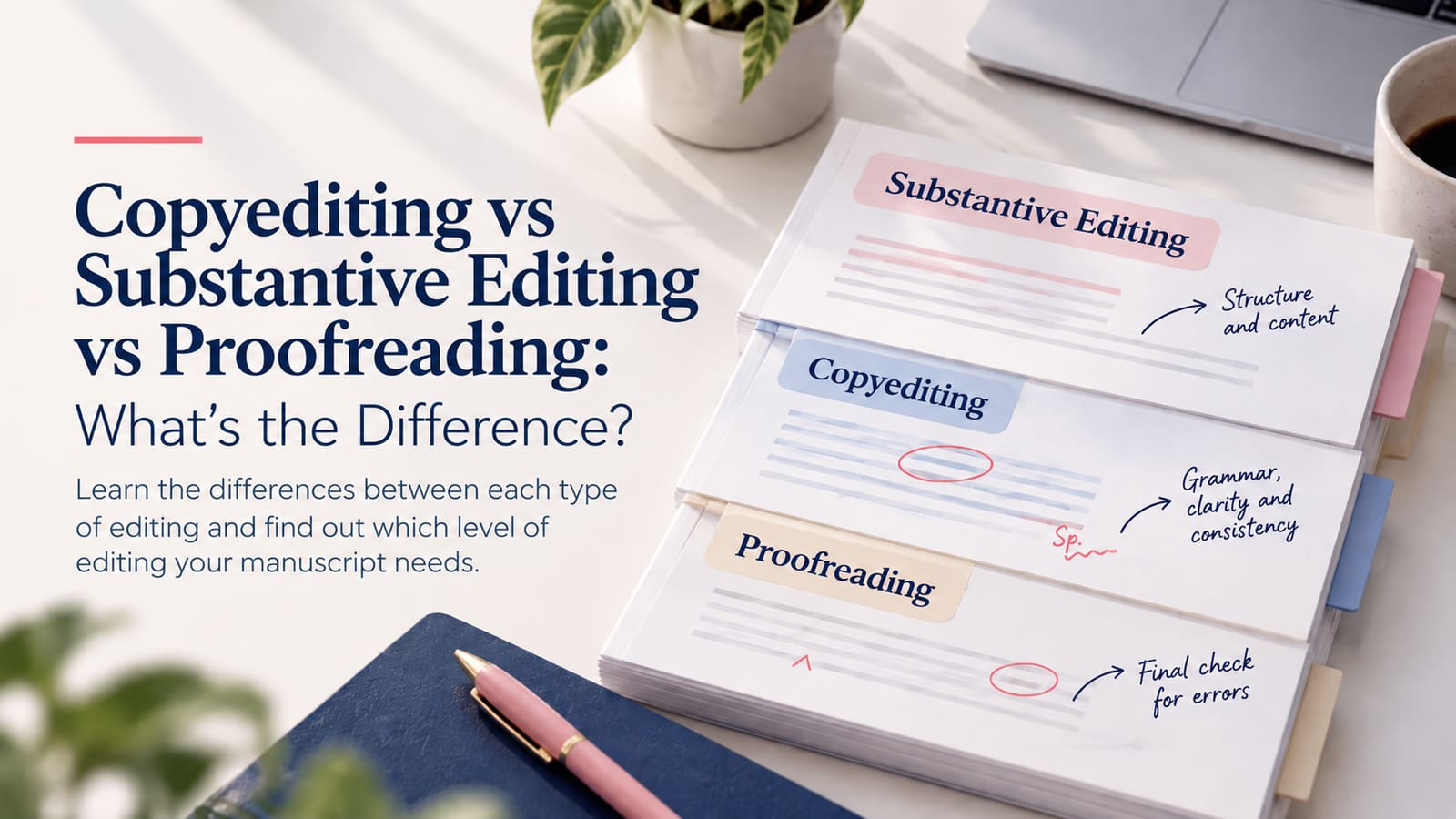
Proofreading is typically the final review. It focuses on correcting spelling, grammar, punctuation, formatting inconsistencies, and other small errors that may have remained after previous revisions.
Copy editing goes a step further by improving sentence structure, readability, consistency, and academic style while preserving the author’s voice. This is the level many researchers choose before submitting a journal article or thesis.
Substantive editing is more comprehensive. In addition to language, it examines the organization of the manuscript, paragraph development, logical flow, and overall presentation of ideas. Authors preparing an early draft often benefit most from this type of review.
What You’ll Receive
Once the editing is complete, authors usually receive a version of the manuscript with tracked changes so every revision is visible. This allows them to review each suggestion before deciding whether to accept it.
Comments may also be included when additional clarification could improve the manuscript or when certain passages require the author’s attention. Rather than simply correcting the text, these notes help explain revisions and support the author’s final decision.
Turnaround times vary depending on factors such as document length, editing level, and the requested deadline. Shorter papers may be completed relatively quickly, while longer or more complex manuscripts naturally require additional review time to ensure consistent quality.
Professional academic editing is much more than correcting grammar. It is a careful review that improves how research is communicated while respecting the author’s voice, ideas, and conclusions.
Knowing what editors do—and what they intentionally leave unchanged—helps set realistic expectations and makes it easier to choose the level of editing that best fits a particular manuscript. Ultimately, the goal is not to change the research itself, but to present it as clearly and professionally as possible before submission.
Ready to Improve Your Manuscript?
Professional academic editing is more than correcting grammar. It helps your research communicate clearly while preserving your ideas and academic voice.
Whether you're preparing a journal article, thesis, dissertation, or research paper, our editors are here to help.
👉 Upload your manuscript today and receive a personalized quote.